When words fade, love remains. This comprehensive guide supports families caring for loved ones through advanced Alzheimer's stages, offering practical strategies for maintaining meaningful connections.
Enhanced with calming audio
Click to begin immersive journey

Understanding the progression helps families prepare with compassion and maintain hope for meaningful moments
As Alzheimer's progresses to later stages, verbal communication may become increasingly difficult or disappear entirely. Your loved one may experience profound confusion and require assistance with basic daily activities.
However, emotional presence and the capacity for connection through touch, music, and familiar comfort remains. The person you love is still there, even when words are no longer available.
"Research shows that some core of the person's self may remain throughout the late stage, meaning meaningful connection is still possible through the senses."
Gentle demonstration of non-verbal communication techniques
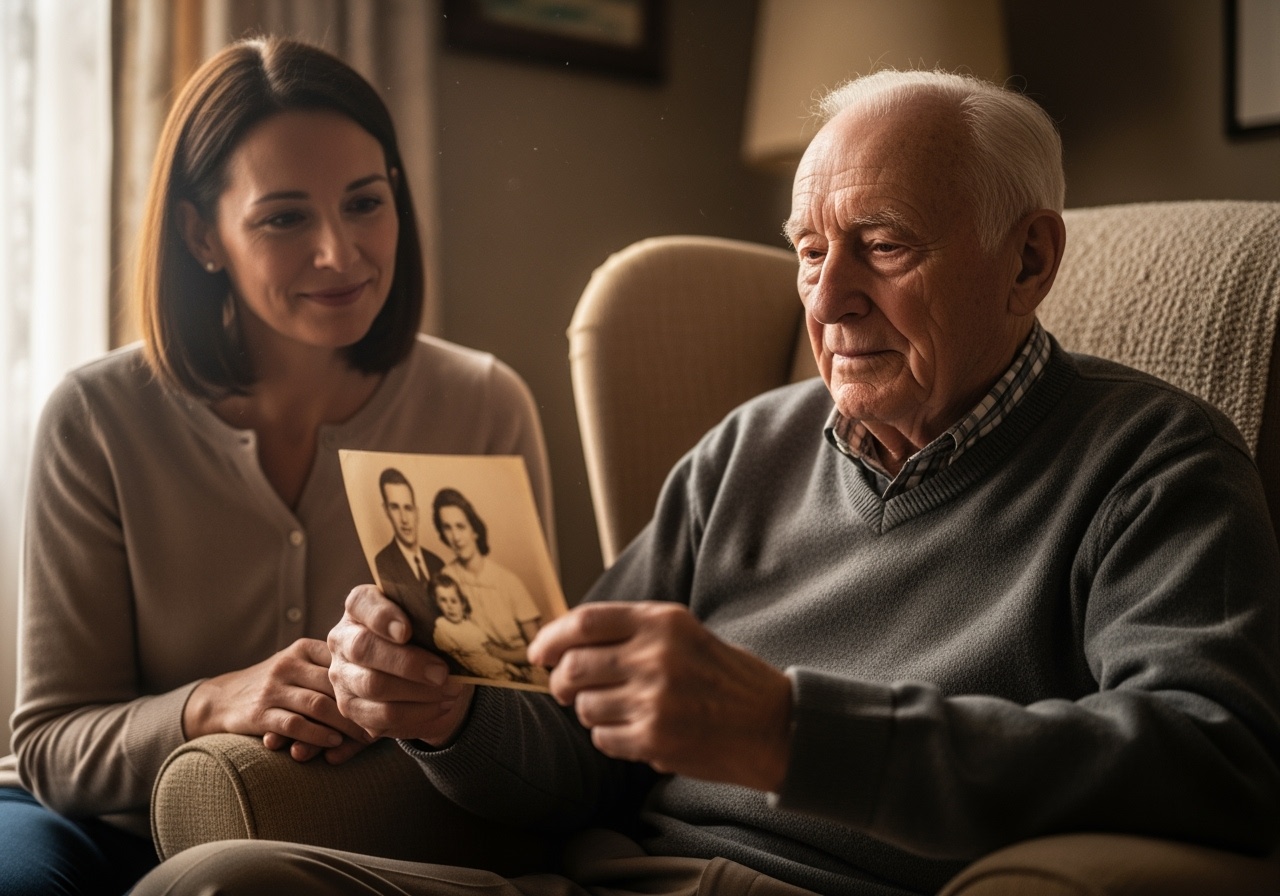
When words fade, physical connection becomes a powerful form of communication and comfort
Hold hands, stroke arms gently, or offer comforting shoulder touches. Physical connection can reduce anxiety and convey love.
Maintain warm, reassuring eye contact. Approach from the front and speak at eye level to create connection and reduce confusion.
Use warm smiles and calm expressions. Your face communicates safety, love, and reassurance more than words.
Music therapy can unlock moments of recognition and emotional connection that seemed impossible
Musical memories are often preserved longer than other types of memory in Alzheimer's disease. Familiar songs can trigger emotional responses, moments of clarity, and even temporary improvement in mood and behavior.
The areas of the brain that process music are typically less affected by Alzheimer's, making music a powerful tool for connection and comfort.
Emotional response to familiar music
Environmental consistency provides security and reduces anxiety in late-stage Alzheimer's care
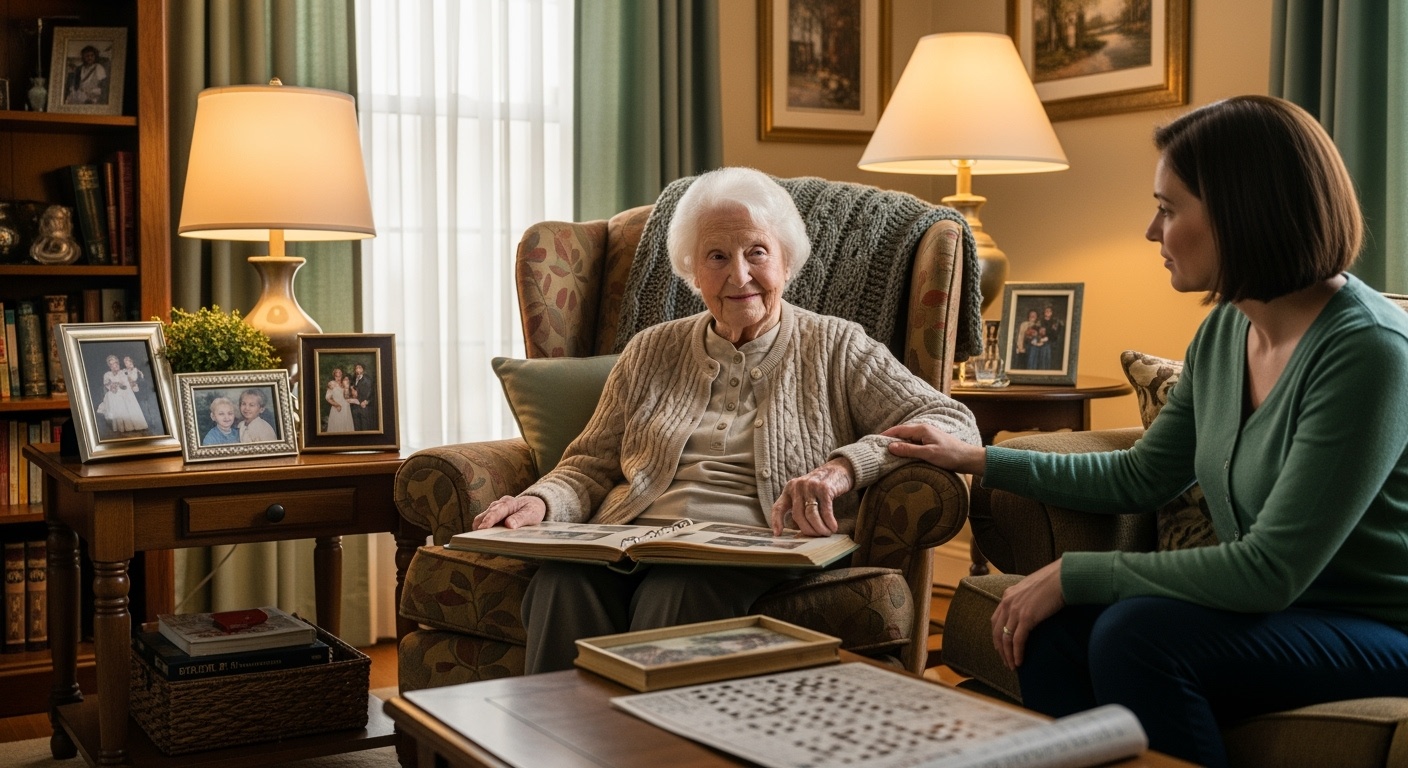
Maintaining familiar surroundings becomes increasingly important as cognitive abilities decline. Family photos, cherished objects, and consistent room arrangements provide emotional anchors in a confusing world.
Even when verbal recognition fades, environmental familiarity can provide comfort and reduce agitation. These visual cues speak to deeper levels of memory and emotional connection.
Maintaining comforting routines and familiar activities
Even in late stages, brief sparks of recognition and connection can occur, creating precious memories
Watch for subtle signs of recognition: a gentle squeeze of the hand, a moment of eye contact, a slight smile, or a peaceful expression when hearing familiar music. These moments, though brief, are profound.
Connection doesn't always require recognition. Your presence, voice, and touch provide comfort even when cognitive awareness seems absent. Trust that your love is felt and meaningful.
Your wellbeing matters. Grief, exhaustion, and frustration are normal responses to this challenging journey
Caring for someone with late-stage Alzheimer's is emotionally and physically demanding. It's normal to experience a range of complex emotions: grief for the person they once were, frustration with the disease's progression, and exhaustion from constant care demands.
Self-care isn't selfish—it's essential. You cannot provide quality care for your loved one if you don't care for yourself. Acknowledging your needs and seeking support is part of being a good caregiver.
"Caregiving is a marathon, not a sprint. Taking breaks doesn't mean you love them any less—it means you're preparing to love them longer."
Join caregiver support groups, connect with others who understand, and don't hesitate to ask for professional help.
Arrange respite care, accept help from family and friends, and protect your own physical and mental health.
Grief, anger, and exhaustion are valid. Processing these emotions is healthy and necessary for long-term caregiving.
You don't have to navigate this journey alone. Help is available.
Find caregiver support groups and respite care services in your community.
Schedule regular check-ups and don't ignore your own physical and mental health needs.
Connect with other families experiencing similar journeys through support groups or online communities.
In the quiet moments, in the gentle touch, in the familiar song—connection endures. Your love makes a difference, even when words are no longer possible. This journey is difficult, but you don't have to walk it alone.
Take care of yourself. Reach out for support. You matter too.