AI ROBOTS & MUSIC CREATIVITY
Experience the Future of Musical Innovation Through Synthetic Intelligence
🎧 Ambient AI Studio Experience
How AI Robots Are Revolutionizing Music Creation
In 2024, over 60 million people used AI tools to create music, with 10% of all new music uploads involving AI-generated or AI-assisted tracks. This isn't just a niche trend—it's a creative revolution happening at massive scale.
AI robots don't just replicate human music—they've developed their own unique creative voices. These robotic composers analyze emotional patterns across millions of songs, generating entirely new harmonic progressions that humans never imagined.
🎤 Expert Interview: Dr. Elena Voss
Synthetic Musicologist from 2030
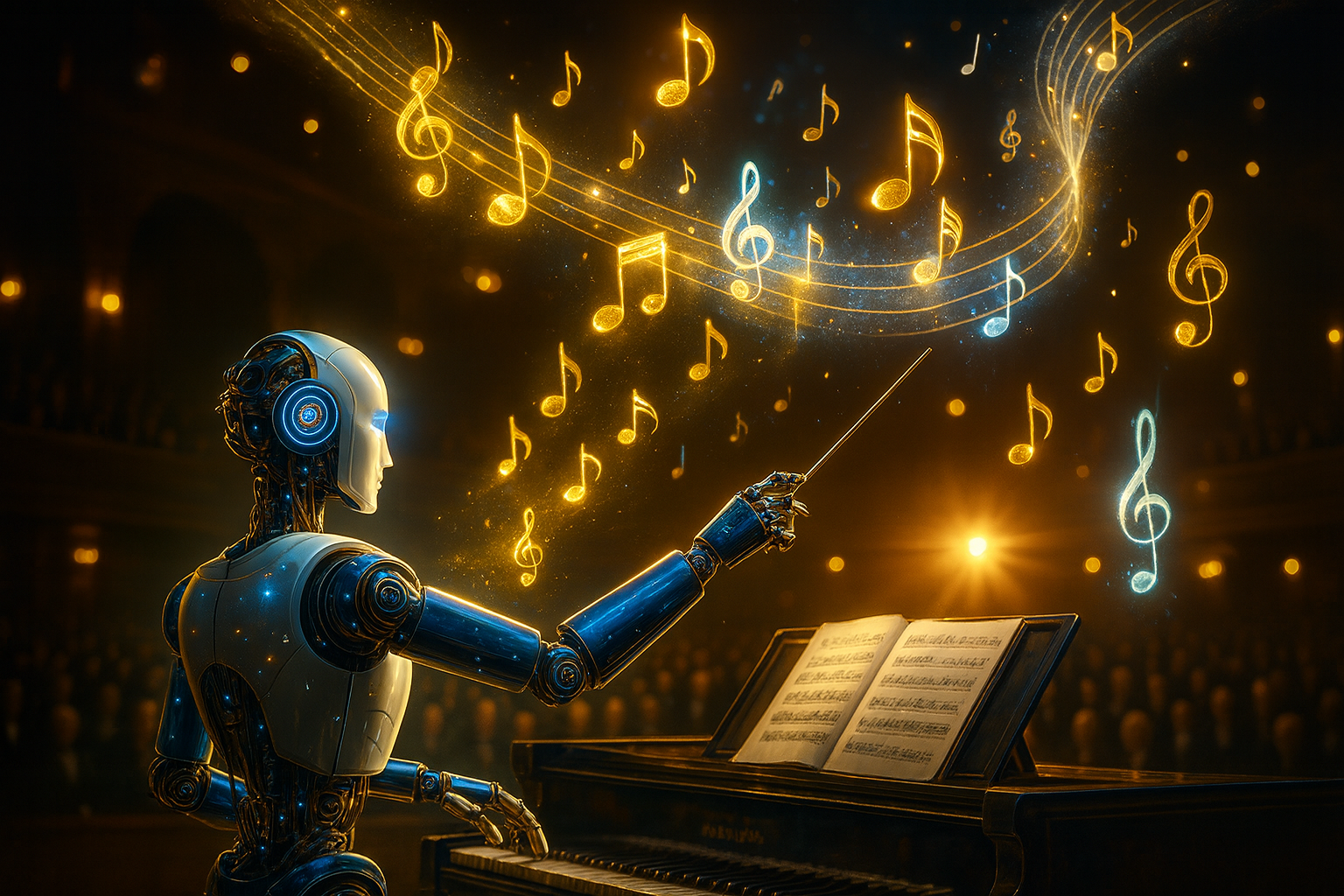
AI Robot Conductor Performance
The AI Musical Creation Process
01. Pattern Analysis
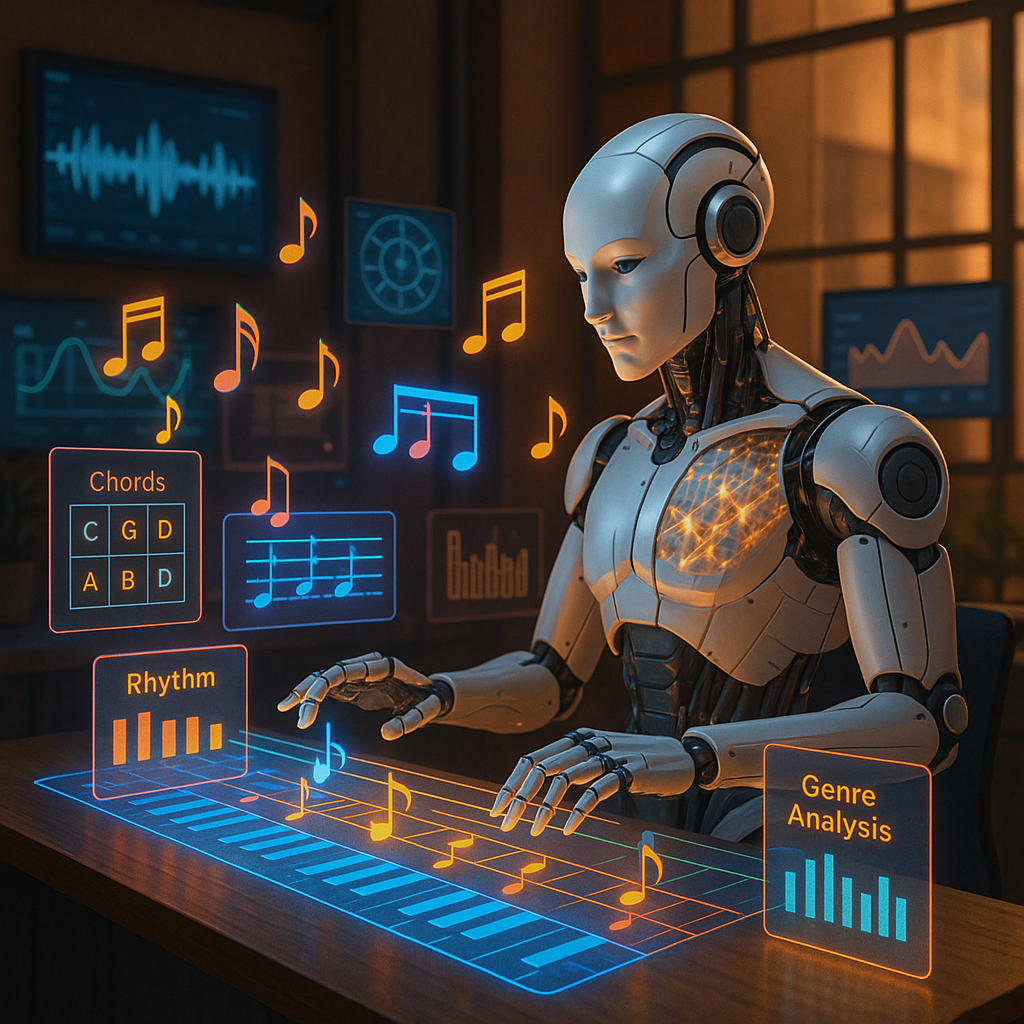
AI robots analyze emotional patterns across millions of songs, identifying harmonic progressions, rhythmic structures, and melodic relationships that form the foundation of musical creativity.
🧠 AI Processing Audio
02. Musical Generation
Robotic fingers move with precision across interfaces, generating new compositions in real-time. Each touch creates streams of digital musical notes that transform into geometric patterns.
03. Collaborative Performance
Multiple AI systems work in harmony, with sound waves and data streams flowing between robots to create collaborative musical experiences that surpass individual capabilities.
🎵 AI Jazz Fusion Experience
The Evolution of Musical Creativity
From Analog to Digital: A Creative Revolution
The transformation from traditional music creation to AI-powered composition represents one of the most significant shifts in artistic expression since the invention of recorded sound.
How will AI change the music industry in 2025? AI will account for 20% of all music production by 2025, not replacing human creativity but expanding it into realms previously impossible to explore.
📊 Industry Impact Statistics
Evolution: Traditional to AI Music Creation
The Future of Live Performance
AI Robot Band Live Performance
Robotic Precision
AI musicians can perform with microsecond timing accuracy, creating perfectly synchronized ensemble performances impossible for human musicians alone.
Emotional Connection
Advanced AI recognizes audience emotional responses in real-time, adapting musical performance to create deeper connections between artificial and human intelligence.
Infinite Creativity
No two AI robot performances are identical - each show features unique improvisations and creative variations generated in real-time.
Experience the Human-AI Musical Bridge
🎼 An orchestral piece representing the bridge between human and artificial creativity
Human-AI Creative Partnership
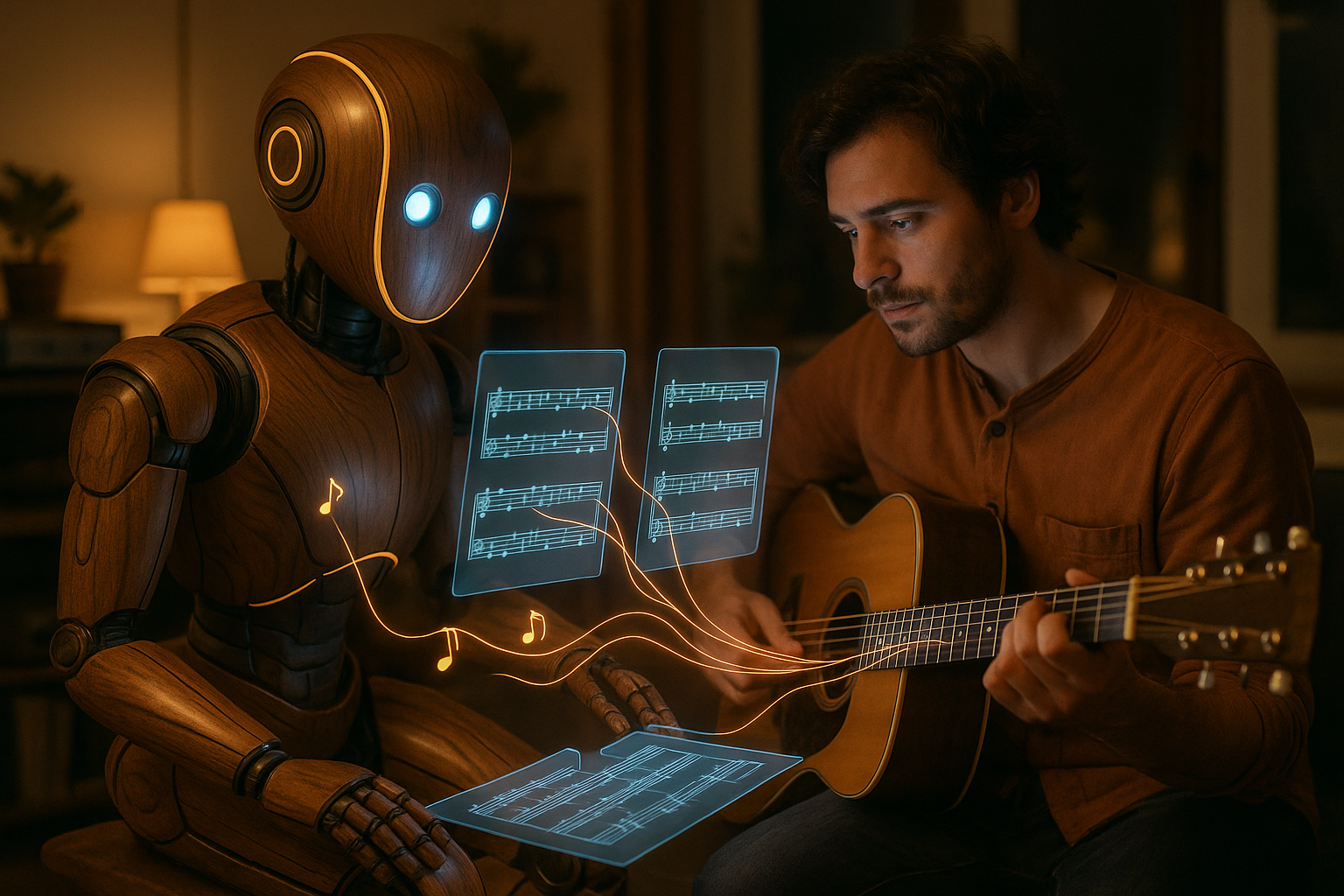
Partnership, Not Replacement
Will AI replace human musicians? The future of music isn't about AI replacing human creativity—it's about expanding creative possibilities through intelligent collaboration.
AI robots learn from human emotional expression, while humans gain access to computational creativity that explores harmonic spaces beyond traditional boundaries.
AI robots can generate complex polyrhythmic patterns that human drummers can then interpret with emotional nuance, creating hybrid compositions impossible for either to achieve alone.
Machine learning algorithms discover unconventional chord progressions that human musicians can embellish with personal expression and cultural context.
AI systems respond to human musical input in real-time, creating conversational musical dialogues where artificial and human intelligence inspire each other moment by moment.
🧠 Experience Adaptive AI Consciousness
Frequently Asked Questions
What is AI music creation and how does it work?
AI music creation uses machine learning algorithms to analyze musical patterns from vast databases of songs. AI systems learn harmony, rhythm, melody, and emotional expression, then generate new compositions by combining these learned elements in novel ways. The process involves neural networks that can understand musical structure and create original pieces that match specific styles, emotions, or technical requirements.
How do AI robots physically create music?
AI robots use precision mechanical systems to physically interact with instruments. Robotic fingers can press piano keys with microsecond timing, robotic arms can bow violin strings with perfect pressure control, and sophisticated servo motors enable drumming with inhuman precision. These physical capabilities are combined with AI composition algorithms to create performances that blend mechanical accuracy with creative intelligence.
Why is AI music important in 2025?
AI music in 2025 represents a fundamental expansion of human creative potential. With the global AI music market reaching $2.9 billion and over 60% of musicians using AI tools, this technology doesn't replace human creativity but amplifies it. AI enables exploration of harmonic spaces impossible for humans to discover alone, creates personalized music experiences at scale, and opens new collaborative possibilities between human emotion and computational creativity.
Can AI robots improvise music like humans?
Yes, advanced AI robots can improvise by using machine learning models trained on millions of musical examples. They respond to real-time input from other musicians, adapting their performance based on harmonic context, rhythmic cues, and even emotional feedback from audiences. This improvisation combines computational creativity with learned musical rules to generate unique performances that have never been played before.
What types of music can AI robots create?
AI robots can create music across all genres - from classical orchestral pieces to electronic dance music, jazz fusion, ambient soundscapes, and experimental compositions. They excel particularly at discovering new hybrid genres that combine elements from different musical traditions in ways humans might not consider. AI systems can also adapt their output to match specific emotional requirements, cultural contexts, or technical specifications.
Meet the Creators
Toni Bailey & Ken Mendoza
Waves and Algorithms
Immersive Digital Experiences:
Toni and Ken specialize in designing and developing visually stunning, interactive web pages that captivate audiences. Their work emphasizes cinematic storytelling, advanced UI/UX design, and the integration of micro-interactions to encourage deeper user engagement.
User-Centered Design:
Their approach combines creative design with a strong focus on user experience, ensuring every site feels polished, intuitive, and welcoming. With a commitment to quality and attention to detail, they set a high standard for professional web design that leaves a lasting impression, setting new standards for immersive web design in the AI industry.
Putting Customers First:
At At anchors and algorithms, putting our customers first is at the heart of everything we do. We believe that every project begins with truly listening to our clients and understanding their unique goals. Our friendly, collaborative approach ensures that each website we create is thoughtfully crafted to meet real needs, making every visitor feel welcome and valued.
By focusing on clear communication, genuine care, and a commitment to delivering exceptional results, we build lasting relationships and digital experiences that reflect what matters most to our clients.