The search landscape has undergone a paradigm shift from keyword-driven search engine optimization (SEO) to answer engine optimization (AEO)—a transformation powered by the convergence of large language models, knowledge graphs, and multi-modal processing capabilities. Answer Engine Optimization is a cutting-edge strategy that focuses on optimizing content to provide direct answers to user queries through AI-powered answer engines like ChatGPT, Perplexity AI, and Google's AI Overviews. Unlike traditional SEO, which prioritizes rankings and traffic, AEO ensures your content appears in AI-generated answers, voice search results, and featured snippets [The Digital Bloom].
Based on analysis of 41M+ AI search results, 30M+ citation patterns, and 75K+ brand studies, it's clear that AI search requires fundamentally different optimization approaches than traditional SEO, with only 12% content overlap between ChatGPT and Google SERP. Citation patterns reveal platform-specific preferences: ChatGPT favors Wikipedia (47.9%), Perplexity prioritizes Reddit (46.7%), and branded web mentions correlate 0.664 with AI visibility—3x stronger than backlinks at 0.218 [Beaux Haus].
This comprehensive guide explores how multi-modal answer engine optimization techniques leveraging large language models, knowledge graphs, and real-time user intent signals can be algorithmically integrated to maximize answer visibility and factual reliability across both conversational AI and traditional search platforms, while ensuring scalable personalization and resistance to adversarial content manipulation in the 2025+ ecosystem.
The 2025 AI Search Ecosystem
Source: Search Engine Land (2025)
What Are Multi-Modal Answer Engine Optimization Techniques?
Multi-modal answer engine optimization techniques incorporate text, voice, images, and structured data to create rich, accurate answer delivery systems that respond intelligently across various user interaction modes. These techniques enable AI systems to process, understand, and generate responses that integrate multiple formats of information simultaneously.
Text Optimization
Answer-first content structure with 50-70 word TL;DR summaries
Question-based hierarchical organization (H2/H3 as natural questions)
Semantic richness with 10-15 variations of core terms
Descriptive alt text with semantic entity relationships
Structured data markup for images and videos
Voice-search friendly language patterns (conversational)
Natural language question mapping for voice queries
Multi-sentence descriptive captions for visual content
The future of search is increasingly multimodal, combining text, voice, image, and potentially other inputs and outputs. To prepare for this evolution, organizations must ensure content is accessible in multiple formats, optimize images and videos with appropriate alt text and structured data, and develop content that works seamlessly across devices [The Digital Bloom].
Multi-Modal Integration Framework
Source: Towards AI (2025)
Multi-modal techniques are particularly effective when they leverage cutting-edge AI technologies that can process and integrate information across formats. For example, the methodology presented in a recent 2025 study combines "deep learning, reinforcement learning, natural language processing (NLP), computer vision, augmented reality (AR)/virtual reality (VR) technology" to create "a seamless, intelligent and intuitive retail experience" [Atlantis Press].
How Do Large Language Models Integrate with Knowledge Graphs?
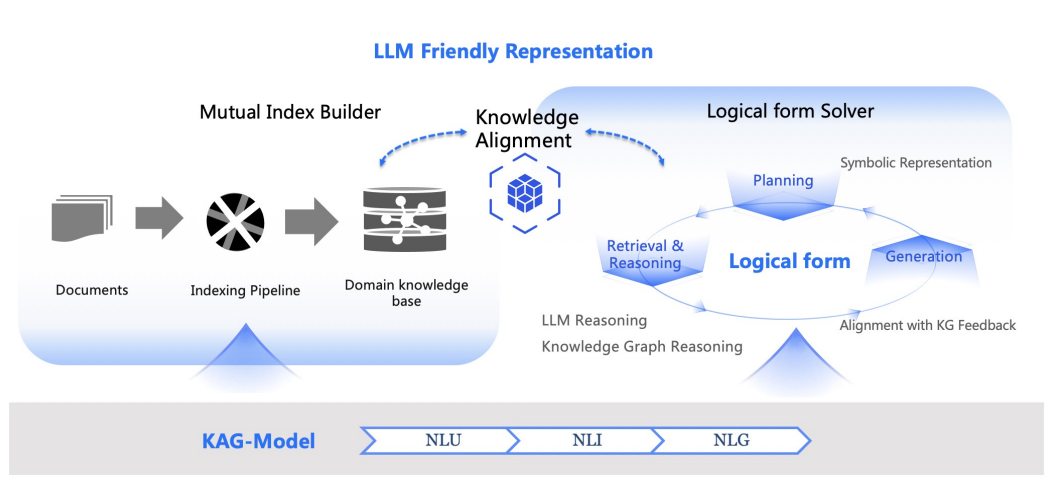
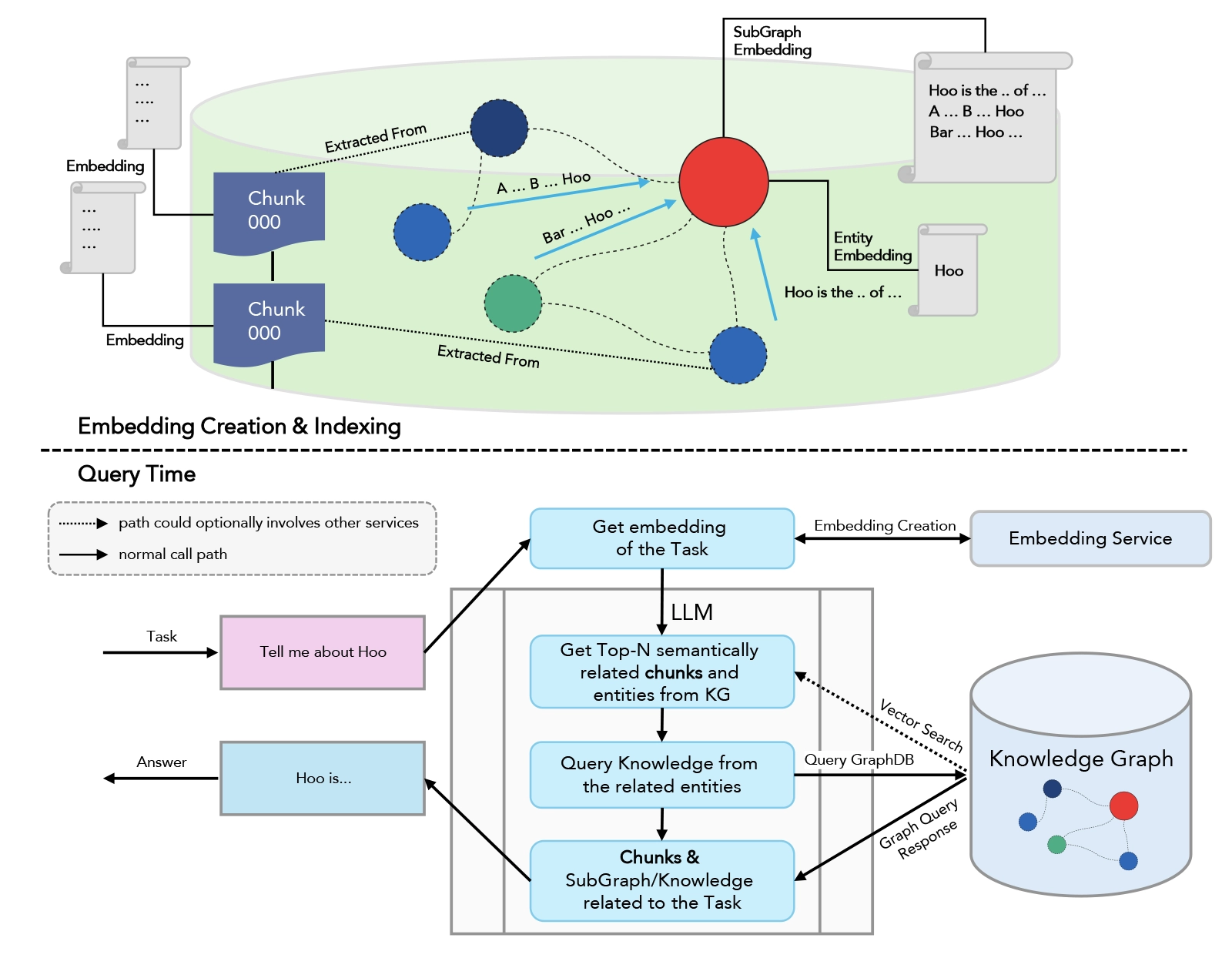
Large language models (LLMs) and knowledge graphs form a powerful synergy for answer engine optimization, combining the generative capabilities of neural networks with the structured, factual relationships of semantic data. This integration addresses LLMs' hallucination tendencies while enhancing their reasoning abilities through grounded, factual context.
LLM-Knowledge Graph Integration Approaches
Source: Infogain (2024)
Knowledge Graphs define the meaning behind relationships, enabling more nuanced and accurate insights. For enterprises, this means greater control over how their data is interpreted, reducing risks like hallucinations in large language models and ensuring their AI tools operate effectively. A benchmark study by Data World found that LLMs grounded in knowledge graphs achieve 300% higher accuracy compared to those relying solely on unstructured data [Schema App].
LLM Capabilities
Natural language understanding and generation
Context comprehension across lengthy documents
Semantic relationship inference
Adaptive response to varied query formulations
Creative content synthesis and summarization
Knowledge Graph Strengths
Structured representation of factual information
Explicit entity and relationship modeling
Verified information with source attribution
Hierarchical knowledge organization
Cross-domain relationship mapping
To facilitate reasoning of LLMs with knowledge graphs, techniques like KG-IRAG (Yang et al., 2025) enable LLMs to incrementally retrieve knowledge and evaluate its relevance, improving factual accuracy and reducing hallucinations [arXiv]. This integration transforms content strategy from focusing purely on keywords to creating semantic layers of interconnected information that both humans and AI can navigate.
How Can Real-Time User Intent Signals Be Algorithmically Leveraged?
Real-time user intent signals provide crucial context for answer engines to deliver relevant, personalized responses. These signals include behavioral data, conversational context, device characteristics, location information, and temporal patterns that help AI systems understand not just what users are asking, but why they're asking it.
Behavioral Signals
Query refinement patterns
Click-through behavior
Dwell time on previous answers
Historical interaction patterns
Content consumption sequences
Contextual Signals
Conversation history and flow
Query modification sequences
Related queries in session
Time-of-day context
Device-specific behaviors
Technical Signals
Device capabilities
Connection speed
Geolocation data
App/browser environment
Input modality (voice, text, image)
Algorithmic integration of user intent signals requires sophisticated real-time processing systems that can interpret these signals and adjust answer delivery accordingly. Recent advances employ reinforcement learning and demand forecasting models to create dynamic personalization strategies, enabling responses to be tailored based on consumer behavior, market trends, and real-time demand fluctuations [Atlantis Press].
Intent Signal Processing Pipeline
Source: Nodus Labs (2025)
AI algorithms can evaluate the trust signals on your website—security badges, reviews, testimonials, and compliance information—ensuring they align with user intent and expectations. These signals can be processed in real-time to adjust the presentation and content of answers based on the user's implicit needs [Columbia University].
"Algorithmic adaptation: AI systems can detect subtle shifts in search engine behavior within hours rather than days or weeks, allowing for rapid adjustment of content to match emerging user intent patterns and changing platform preferences." [Search Engine Land]
What Strategies Maximize Visibility Across ChatGPT, Perplexity AI, and Google AI Overviews?
Each AI search platform exhibits distinct citation preferences and algorithmic behaviors, requiring tailored optimization strategies. Recent analysis of 30 million citations spanning August 2024 to June 2025 demonstrates that the top 10 most-cited sources vary dramatically across platforms, with each favoring different content types, structures, and sources [Beaux Haus].
Platform Citation Preferences (2025)
ChatGPT Optimization
ChatGPT takes a more established route to authority, with Wikipedia claiming a remarkable 47.9% of its top 10 most-cited sources [Beaux Haus].
Encyclopedia-quality definitions
Neutral, authoritative tone
Multiple credible source citations
Historical context and evolution
Fact-dense content with attribution
Balanced perspectives presentation
Perplexity AI Optimization
Perplexity AI's citation patterns reveal a strong preference for community-generated content, with nearly half (46.7%) of its top 10 most-cited sources originating from Reddit [Beaux Haus].
Discussion-worthy insights
Current trends and applications
Recently-updated information
Community-relevant examples
FAQ markup (100% citation boost)
PDF versions (22% higher citation)
Google AI Overviews Optimization
Google AI Overviews presents a more diverse citation distribution. YouTube holds significant weight at 18.8%, Reddit at 21%, Quora at 14.3%, and LinkedIn at 13% [Beaux Haus].
Mobile-first, sub-1MB page structure
Comprehensive schema markup
Clear answer boxes
Core Web Vitals compliance
Local relevance integration
Multimedia content descriptions
Cross-platform optimization requires a strategic approach that balances platform-specific tactics with core quality signals. Focus on being easily referenced and cited rather than just comprehensive. Write content that answers questions completely in standalone sections, providing direct answers upfront instead of building suspense [Semrush].
"Traditional SEO optimizes for rankings. AI search engine optimization optimizes for citations." [Semrush]
Platform-Specific Citation Patterns
Source: Search Engine Land (2025)
How Can Content Be Optimized for Factual Reliability?
Factual reliability is paramount for AI-powered answer engines, as users increasingly rely on these systems for accurate information. Optimizing content for factual reliability involves both content creation practices and technical implementations that help AI systems verify and ground their responses in trustworthy sources.
Content Creation Practices
Include specific, sourced statistics with publication dates
Provide expert quotes with clear attribution
Present balanced perspectives on controversial topics
Include detailed methodology sections for research
Update content regularly with revision timestamps
Create citation-worthy original research
Technical Implementations
Implement comprehensive schema markup
Build semantic data layers with entity relationships
Use structured data for citations and references
Provide detailed author credentials markup
Include machine-readable publication/update dates
Link to authoritative primary sources
Schema Markup improves factual reliability by providing structured, semantic information that helps AI systems accurately interpret and contextualize website content. By defining explicit relationships between entities using Schema Markup and building robust content knowledge graphs, organizations can reduce the risk of hallucinations (AI fabricating incorrect facts), ensure AI tools are grounded in accurate data, and enable AI to draw correct insights from web content [Schema App].
Knowledge Graph for Factual Reliability
Source: MDPI (2025)
The importance of high-quality structured data for AI cannot be overstated. A benchmark study found that LLMs grounded in knowledge graphs achieve 300% higher accuracy compared to those relying solely on unstructured data [Schema App]. This dramatic improvement in factual reliability makes knowledge graph integration a critical component of answer engine optimization.
"Even though LLMs are getting better at understanding the content on a page by crawling the HTML, they are still prone to hallucinations. Implementing semantic structured data at this juncture could potentially futureproof your website for the day when these AI search engines do start utilizing this semantic data layer." [Schema App]
What Technical Implementations Support AI Crawler Accessibility?
Technical implementation for AI crawler accessibility ensures that AI systems can effectively access, process, and understand your content. These implementations focus on structured data, crawler directives, performance optimization, and content formatting that facilitates AI parsing and interpretation.
Schema Markup Implementation
Source: Backlinko (2025)
Essential Schema Types
The schema types most valuable for AI crawlers in 2025 include [Schema App]:
Review snippets (schema.org/Review)
Product markup (schema.org/Product)
Event markup (schema.org/Event)
Video schema (schema.org/VideoObject)
Organization schema (schema.org/Organization)
Person schema (schema.org/Person)
Article schema (schema.org/Article)
AI Crawler Technical Requirements
HTML-first content structure (minimal JavaScript)
Clean heading hierarchy (H1→H2→H3 progression)
Descriptive alt text for all images and media
Table structures for comparative data
Clear internal linking with descriptive anchor text
llms.txt file implementation for AI crawler guidance
Robots.txt configuration for AI crawlers
Verify AI Systems Can Access Your Content by checking your robots.txt file for blocks against common AI crawlers like GPTBot (ChatGPT), CCBot (various AI systems), and Claude-Web (Anthropic). If you see Disallow: / for these crawlers, you're blocking AI access [Semrush].
Technical Verification Tools
Google's Rich Results Test: Verify your structured data markup works properly
Robots.txt checker: Ensure you're not blocking AI crawlers like GPTBot or CCBot
Schema Markup Validator: Test schema implementation for errors
Mobile-Friendly Test: Verify responsive design for AI mobile crawlers
Page Speed Insights: Check loading performance for AI processing
Dynamic Schema Implementation allows for conditional schema markup that adapts to different AI crawler requirements. This approach creates a more flexible technical foundation that can respond to the evolving needs of different AI platforms [M8L].
"Schema markup isn't just for SEO anymore — it's how AI knows what your content is about. Structured data increases your chances of being correctly understood and cited by AI systems across platforms." [Writesonic]
How Can Personalization Be Implemented While Protecting Privacy?
Implementing real-time personalization while protecting user privacy requires sophisticated techniques that balance the need for contextual relevance with robust data protection. Modern approaches use federated learning, differential privacy, and other privacy-preserving technologies to deliver personalized experiences without compromising sensitive information.
Privacy-Preserving Techniques
Federated Learning: Models learn on distributed data without centralizing sensitive information
Differential Privacy: Adds mathematical noise to protect individual data while maintaining aggregate insights
Edge Computing: Processes sensitive data locally on user devices
Anonymization: Removes personally identifiable information while preserving behavioral patterns
Pseudonymization: Replaces identifying data with artificial identifiers
Contextual Personalization: Adjust based on device, location, and time-of-day without personal data
Interest-Based Clustering: Group users by anonymous behavior patterns
Real-Time Interaction Analysis: Respond to current session behavior only
User Control Mechanisms: Allow explicit personalization preferences
Real-time personalization in AI systems can be achieved using advanced hybrid and multi-modal AI techniques that continuously adapt based on real-world data and interaction contexts. Privacy is protected using federated learning, differential privacy, explainable AI, strict ethical standards (bias mitigation, transparency, control), and ongoing compliance with data protection regulations [Atlantis Press].
Privacy-Preserving Personalization Framework
Source: NVIDIA Developer (2025)
Recent techniques for balancing personalization and privacy include AI-powered dynamic creative elements that automatically tailor content based on real-time context while respecting privacy boundaries. These approaches avoid storing personal data by focusing on contextual signals rather than individual profiles [Ad Age].
"Techniques like federated learning and differential privacy are integrated to safeguard data usage and maintain consumer trust while still enabling sophisticated real-time personalization that adapts to user behavior and preferences." [Atlantis Press]
What Defense Mechanisms Exist Against Adversarial Content Manipulation?
Adversarial content manipulation poses significant challenges to AI search systems, potentially compromising factual reliability, introducing bias, or exploiting vulnerabilities. Effective defense mechanisms combine content-level strategies with technical safeguards to ensure AI systems remain robust against manipulation attempts.
Key Adversarial Attack Types
Based on the NIST report on adversarial machine learning [NIST]:
Evasion Attacks: Modifying input data at inference time
Poisoning Attacks: Manipulating training datasets
Backdoor Attacks: Inserting covert triggers or patterns
Adversarial Training: Exposing models to manipulation attempts
Data Sanitization: Filtering suspicious inputs
Robust Optimization: Making models resilient to perturbations
Certified Defenses: Mathematical guarantees of robustness
Prompt Formatting: Structural protections against injection
Content Monitoring: Automated detection of manipulation
Defense strategies against adversarial content manipulation include adversarial training, data/model sanitization, robust optimization, certified defenses, access controls, input filtering, privacy-preserving methods, prompt engineering, monitoring, and system design assuming eventual compromise. However, all face substantial trade-offs in accuracy, performance, and completeness [NIST].
Adversarial Defense Framework
Attack Type
Primary Defense
Secondary Defense
Limitations
Evasion
Adversarial Training
Randomized Smoothing
Reduced accuracy, computational cost
Poisoning
Data Sanitization
Robust Optimization
Limited against sophisticated attacks
Backdoor
Trigger Reconstruction
Model Inspection
Stealthy backdoors remain challenging
Prompt Injection
Prompt Formatting
Output Filtering
Evolving attack techniques
Indirect Injection
Source Filtering
Trust Hierarchy
Balance between utility and security
The evolving nature of adversarial attacks requires ongoing vigilance and adaptation. Security practices should include real-time monitoring of AI systems and prompt incident response when potential manipulation is detected [ResearchGate].
"Despite a broad suite of mitigations (adversarial training, data sanitization, certified defenses, DP, prompt formatting, usage restrictions, logging, input filtering, etc.), nearly all current strategies come with significant trade-offs such as reduced accuracy, high computational cost, or incomplete protection." [NIST]
This comparison highlights the distinct preferences and optimization approaches required for each platform. The data shows that Reddit emerges as a universal citation champion across all three AI search engines, making Reddit optimization essential for comprehensive AI visibility [Beaux Haus].
Cross-Platform Optimization Checklist
Maintain an optimized Wikipedia presence for ChatGPT visibility
Develop an active Reddit presence across relevant communities
Create YouTube content for Perplexity and Google AI citations
Establish professional profiles on LinkedIn and Quora for Google AI
Implement comprehensive schema markup for all platforms
Structure content with question-based headings across all content
Provide direct, immediate answers at the beginning of each section
Include platform-specific elements based on citation preferences
Frequently Asked Questions
What is the difference between SEO and Answer Engine Optimization (AEO)?
Traditional SEO aims to rank content higher in search results by optimizing for keywords, while AEO focuses on making your content accessible for AI platforms to provide direct answers. SEO drives traffic to websites, whereas AEO ensures your content appears in featured snippets, voice search results, and AI-generated answers without requiring users to visit your site [The Digital Bloom].
How important is schema markup for AI search optimization in 2025?
Schema markup is critically important for AI search optimization in 2025. It remains a foundational tool to ensure content visibility and understanding by both modern search engines and generative AI systems. Google and Bing still actively utilize structured data for advanced features, and schema markup helps futureproof websites for the evolving AI landscape. A benchmark study found that LLMs grounded in knowledge graphs achieve 300% higher accuracy compared to those relying solely on unstructured data [Schema App].
Which AI platforms should I prioritize for optimization in 2025?
In 2025, prioritize optimization for ChatGPT, Perplexity AI, and Google AI Overviews as they represent the dominant AI search ecosystems. Each platform has distinct citation preferences: ChatGPT favors Wikipedia (47.9%), Perplexity prioritizes Reddit (46.7%), and Google AI Overviews uses a balanced mix of sources including Reddit (21%), YouTube (18.8%), Quora (14.3%), and LinkedIn (13%). For maximum visibility, develop a multi-platform strategy that addresses these different preferences while maintaining core quality standards [Beaux Haus].
How can I verify if AI crawlers can access my content?
To verify AI crawler access, check your robots.txt file at yoursite.com/robots.txt for blocks against common AI crawlers like GPTBot (ChatGPT), CCBot (various AI systems), and Claude-Web (Anthropic). If you see "Disallow: /" for these crawlers, you're blocking AI access. Also ensure your content isn't hidden behind login walls, paywalls, JavaScript-only navigation, or affected by missing/broken canonical tags, server errors, or extremely slow loading times [Semrush].
What specific content structures are most effective for AI search visibility?
The most effective content structures for AI search visibility include: 1) Answer-first organization with 50-70 word TL;DR summaries that directly answer primary search intent; 2) Question-based hierarchical headings that mirror natural user queries; 3) Standalone sections that can be extracted as complete answers; 4) Explicit, upfront answers before detailed explanations; 5) Structured data markup for content relationships; and 6) Quotable statistics and insights formatted for easy extraction. This structure makes content immediately useful to AI systems without requiring context from other sections [Semrush].
How can personalization be implemented while protecting user privacy?
Personalization while protecting privacy can be achieved through: 1) Federated learning, where models learn on distributed data without centralizing sensitive information; 2) Differential privacy techniques that add mathematical noise to protect individual data while maintaining aggregate insights; 3) Edge computing that processes sensitive data locally on user devices; 4) Contextual personalization based on non-personal signals like device type and location; 5) User control mechanisms that allow explicit personalization preferences; and 6) Interest-based clustering that groups users by anonymous behavior patterns [Atlantis Press].
What defense mechanisms protect against adversarial content manipulation?
Defense mechanisms against adversarial content manipulation include: 1) Adversarial training that exposes models to manipulation attempts; 2) Data sanitization to filter suspicious inputs; 3) Robust optimization making models resilient to perturbations; 4) Certified defenses providing mathematical guarantees of robustness; 5) Prompt formatting with structural protections against injection; 6) Content monitoring for automated detection of manipulation; 7) Input filtering systems; and 8) Trust hierarchies for content sources. While effective, these defenses involve trade-offs in accuracy, performance, and protection completeness [NIST].
How often should content be updated for optimal AI search visibility?
Content update frequency should vary by platform and content type. For Perplexity AI, frequent updates are crucial as recency bias provides a 38% citation boost. ChatGPT places greater emphasis on verified information than recency, while Google AI Overviews takes a balanced approach. Generally, update factual content whenever new information becomes available, refresh statistics and examples quarterly, conduct major content revisions annually, and immediately update any content containing outdated or incorrect information. Each update should include explicit update timestamps in both visible text and structured data [Beaux Haus].
Key Takeaways
Platform-Specific Optimization
AI search requires platform-tailored approaches—ChatGPT favors Wikipedia-style authority (47.9%), Perplexity prioritizes Reddit (46.7%), and Google AI uses balanced sources including YouTube (18.8%). This divergence necessitates customized content strategies for each platform while maintaining consistent core quality signals.
Structured Data Imperative
Schema markup and structured data are no longer optional—they're essential for AI understanding. LLMs grounded in knowledge graphs achieve 300% higher accuracy compared to those using unstructured data alone. Implementing comprehensive schema markup provides AI systems with explicit semantic relationships that reduce hallucinations and improve factual reliability.
Content Architecture Revolution
AI-first content architecture demands answer-first structure, question-based hierarchies, and standalone information chunks. Write content that answers questions completely in self-contained sections, providing direct answers upfront instead of building suspense. This architecture supports AI citation while maintaining human readability.
Multi-Modal Integration
The future of search is increasingly multi-modal, combining text, voice, image, and video inputs and outputs. Organizations must ensure content is accessible across formats, optimize media with semantic descriptors, and develop content that works seamlessly across devices and interaction modes while maintaining semantic consistency.
Privacy-Preserving Personalization
Balancing personalization with privacy requires sophisticated techniques like federated learning, differential privacy, and edge computing. These approaches enable contextual relevance without compromising sensitive data, allowing for personalized experiences that respect user privacy and comply with evolving regulations.
Adversarial Resilience
Protecting against adversarial manipulation requires layered defenses including data sanitization, robust optimization, and content monitoring. While no single approach provides complete protection, combining technical safeguards with content-level strategies creates resilient systems that can withstand emerging threats while maintaining performance.
Implementation Timeline
90-Day AEO Implementation Roadmap
Days 1-30: Foundation Building
Conduct platform-specific analysis of top performers in your niche
Audit technical accessibility for AI crawlers (robots.txt, crawler access)
Establish monitoring systems for AI visibility and citations
Ongoing Maintenance
Regular content freshness updates (weekly for time-sensitive content)
Monthly citation and visibility analysis across platforms
Quarterly schema markup and technical accessibility audits
Bi-annual comprehensive content strategy review
Continuous monitoring of platform algorithm changes
Regular adversarial testing of content security measures
About the Authors
About Waves and Algorithms
Waves and Algorithms is a leading research and consultancy firm specializing in advanced AI technologies for search and information retrieval. Our team combines academic rigor with practical implementation expertise to develop cutting-edge solutions for enterprise clients and research partners worldwide.